ON THE STAGE | LH STAFF
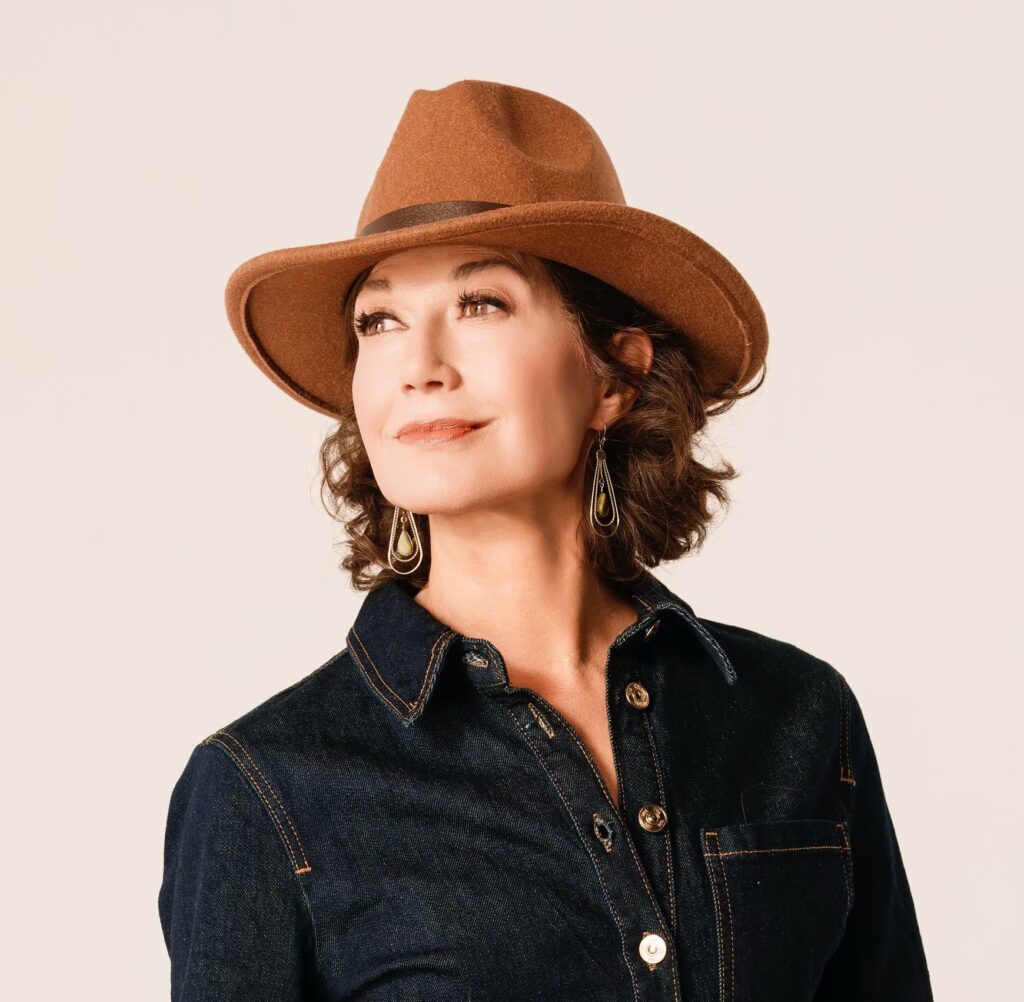
She nearly died twice in the span of a few years.
First came open-heart surgery in 2020 to correct a rare congenital defect—something she’d been living with unknowingly her entire life, a ticking time bomb, as she put it, that was only caught during a routine checkup.
Then in the summer of 2022, a bike accident near her Nashville home sent her to the hospital unconscious, left her with a traumatic brain injury, and set off a cascade of complications that would keep her recovering for years.
The impact caused a previously undetected cyst in her throat to go into hypergrowth, requiring a separate five-hour surgery — after which she had to relearn how to sing.
Now, at 65, Amy Grant is releasing her first album of original songs in over a decade. And it sounds nothing like someone trying to prove a point.
Out of the Cave and Into the Studio
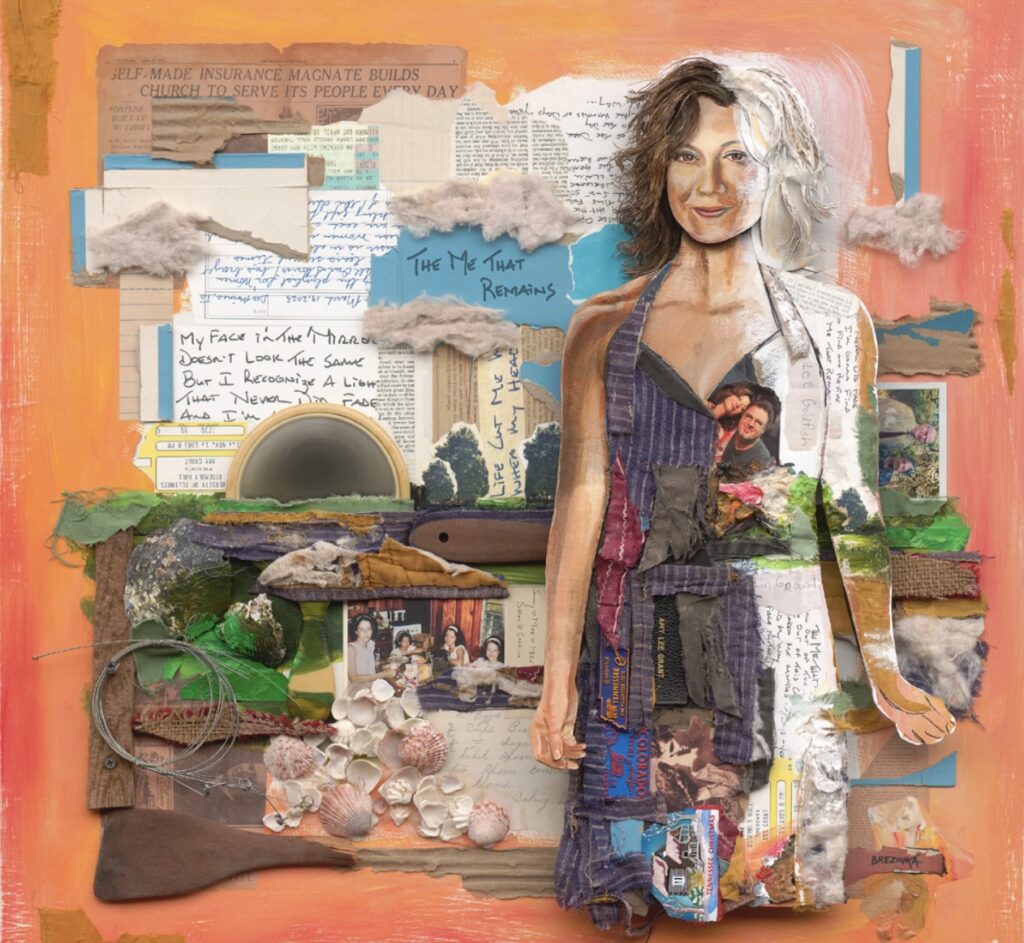
The Me That Remains, out May 8, is quiet in the way that only deeply lived experience can make something quiet.
Produced by Mac McAnally—the kind of Nashville fixture whose understated touch is precisely the point—the ten-song collection strips away the production sheen that defined so much of Amy’s commercial peak and replaces it with something harder to manufacture: presence.
The title track sets the tone immediately.
Co-written with McAnally, it addresses the health crises directly and without sentimentality. When she sings about her head hitting the ground, she’s not reaching for metaphor. The song moves from wreckage to gratitude in a way that feels earned rather than tidy — and the final image, a smile in the mirror reflecting a light that never faded, lands less like resolution than like a quiet daily commitment. It’s worth noting that the road back wasn’t straightforward.
As recently as late 2024, she was candid about the fact that her processing had been so slow after the accident that she sometimes felt present in a room but unable to fully participate, before eventually feeling, in her own words, “fully in control” again. The album, in many ways, is the document of that return.
“The older I get, the more aware I am that we all live long enough to see versions of ourselves pass away.”
The Questions She Never Stopped Asking
But to read it only as a recovery record would be to miss something.
What the songs are really reaching toward is a question Amy has been sitting with her entire career, just with more weight behind it now: what does faith actually look like when the easy answers have worn away?
She has spoken about having gradually moved away from the kind of organized faith-community culture that shaped her early life, arriving at something harder to name but, for her, more honest. She still anchors herself in Scripture—she’s spoken warmly about the verse from Acts, “In him we live and move and have our being,” as something she feels in her body, not just her head—but the framework around it has loosened and deepened.
“God so loved us,” she has said simply. “There is no dividing line.” Not between races, not between cultures, not between faith traditions. It’s the kind of theology that doesn’t fit neatly on a Christian radio playlist, which may be exactly why this album isn’t on a Christian label.
The People Who Stayed
What’s notable about the record is the company Amy keeps on it.
Collaborations with Vince Gill, Ruby Amanfu, and longtime friend Michael W. Smith give it the feeling of a musician drawing her circle close—not as a marketing exercise, but as a natural reflection of how her life is actually structured. She and Smith have been close since the early 1980s, when they toured and wrote together as young artists just starting to figure out what they were doing.
That the two are still making music together forty-plus years on says something, not just about loyalty, but about the kind of creative relationships that actually sustain a career over the long haul.
A Trailblazer Who Paid the Toll
Amy has spent more than 50 years in music—she recorded her debut album at 16, signed to a Christian label after a home demo tape fell into the right hands.
Her 1982 album Age to Age became the first record by a solo Christian artist to go platinum, and she spent the rest of the decade methodically dismantling the walls between sacred and secular music. She scored her first Billboard Hot 100 number one in 1986 with a duet alongside Peter Cetera, and by the time Heart in Motion arrived in 1991, she was a full-blown pop star — “Baby Baby” and “Every Heartbeat” playing in malls and on radio stations that had never touched Christian music before.
She was a trailblazer, and she paid the price for it in some quarters, facing sustained criticism from parts of the Christian community who felt she was drifting too far from her roots. None of that is what she’s writing about now.
What the Mirror Shows at 65
“The older I get,” Amy reflects, “the more aware I am that we all live long enough to see versions of ourselves pass away.”
It’s a thought that could easily tip into melancholy, but she doesn’t let it. Given the years she’s had—the surgeries, the recovery, the slow work of piecing herself back together—there’s something almost freeing in how she talks about it. The younger Amy Grant, the one who sold out arenas and rewrote the rules of Christian music, is someone she’s had to consciously remember and release.
What’s left, she says, is a deeper curiosity.
About connection. About purpose. About how, as she puts it, “the Love that made us all will emerge and express itself in and through me today.”
She’ll mark the release with a show at the Ryman Auditorium on May 8—which feels right. The Ryman is a room that rewards exactly this kind of artist: someone who has outlasted trends, survived the worst, and still has something worth singing.
The Me That Remains is out May 8 via Thirty Tigers, available on vinyl, CD and all streaming platforms.